how to find japanese suppliers
How to Find Japanese Suppliers: A Practical Guide for Overseas Buyers
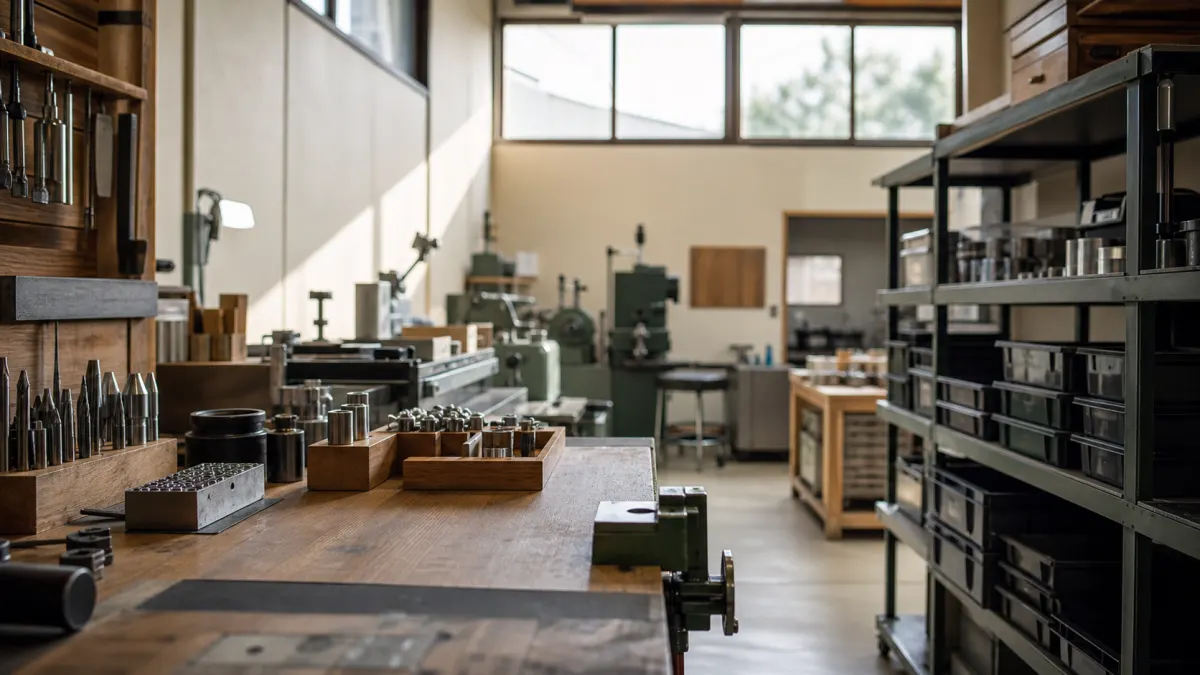
Sourcing from Japan does not work the way sourcing from China works. There is no single dominant marketplace where you filter by minimum order quantity and message a thousand factories. Most Japanese manufacturers have no English website, no export desk, and little interest in a first email that opens with a price demand. The suppliers exist, and many of them will export. The path to them simply runs through channels that are close to invisible from outside the country.
Why Japanese sourcing feels closed from the outside
There are three structural reasons, and none of them is that Japanese companies dislike foreign business.
- Domestic demand has historically been enough. For a great many mid-sized Japanese makers, export is an optional side activity rather than a growth strategy. There is no export department because no one has needed one.
- Distribution runs through layers. Goods move through wholesalers (tonya) and general trading companies (shosha) rather than direct factory sales. The maker you found may be contractually unable to sell to you even if they want to.
- Trust precedes terms. An unknown overseas company asking for a quotation in English reads as risk, not opportunity. The commercial conversation starts after the credibility conversation, not before it.
The practical implication is that your effort goes into being introduced and qualified, not into comparison-shopping. Buyers who treat Japan like a supplier database get silence and conclude the market is closed. It is not closed. It is sequenced differently.
The five channels that actually work
| Channel | What it is | Best for | The catch |
|---|---|---|---|
| Trading companies (商社) | Export-capable intermediaries that hold supplier relationships and handle documentation | First orders, mixed categories, buyers with no Japanese entity | Margin is added, and they may decline to name the actual maker |
| Wholesalers (問屋) | Layered B2B distributors serving Japanese retail | Branded consumer goods in volume | Almost always require a Japanese corporate account |
| Trade shows | FOODEX JAPAN, Beautyworld Japan, Tokyo International Gift Show, Interior Lifestyle Tokyo and sector equivalents | Discovering makers and comparing many of them in a few days | You need to be physically in Japan, and to follow up in Japanese |
| Public bodies and associations | JETRO, prefectural export desks, industry associations | Verified lists of companies that are already export-minded | Lists are a starting point, not a shortlist |
| Direct outreach | Contact form or email to the maker, in Japanese | Niche, craft and specialist products with no distributor | Low reply rate without a credible introduction |
Most successful sourcing programmes use two or three of these at once: a trade show or association list to build a candidate set, direct outreach to qualify, and a trading company or Japan-side partner to actually transact.
The Japanese-entity wall
The routes that look easiest from a search engine — domestic wholesale platforms, distributor accounts, some direct maker sales — are the ones most likely to be closed to a company with no presence in Japan. What gets asked for is consistent:
- A registered Japanese company and its corporate number. Some wholesalers additionally require two or more years of trading history.
- A Japanese delivery address, and frequently a Japanese bank account for settlement.
- A wholesale account application and credit review before the first order ships.
- Category licences where they apply: an antiques dealer licence for anything secondhand, an alcohol sales licence for sake and spirits, food business registration for certain food handling.
There are two lawful ways past this wall. Buy from a Japanese company that is already set up to export, which is the trading-company route. Or work with a Japan-side partner who holds the account, buys domestically, and acts as exporter of record on your behalf.
Tax point that catches almost everyone: goods bought inside Japan carry consumption tax. Exports are zero-rated, but the exemption belongs to the exporter, who must be a registered taxable business in Japan and retain export permits and supporting evidence for seven years. If you buy domestically and forward the parcel yourself, you will generally pay that tax and never recover it.
How to verify a Japanese supplier before you pay
The common failure in Japan sourcing is not outright fraud. It is paying a fourth intermediary at first-tier prices, or ordering from a company whose real capacity is a fraction of what the quotation implies. Both are avoidable with public records.
- Corporate number register. The National Tax Agency publishes a free, searchable register of corporate numbers, registered names and addresses. A company that cannot produce a corporate number is not a registered Japanese corporation.
- Commercial register extract. Available from the Legal Affairs Bureau, this shows incorporation date, stated capital, directors and the history of changes. Anyone in Japan can request one for any company.
- Credit reports. Teikoku Databank and Tokyo Shoko Research are the two standard Japanese credit agencies. A report costs money and answers the solvency question properly.
- Certifications, by number. JAS, ISO, HACCP, FSSC 22000 and organic schemes all have issuing bodies and certificate numbers. Ask for the number and the scope, not a logo pasted into a PDF.
- Someone physically present. A visit, or a proxy visit, confirms that the registered address is a factory rather than a serviced office, and that the people on the call are the people running the line.
How to write a first inquiry that gets answered
- Write in Japanese. Machine translation is acceptable if it is checked; an English-only inquiry is frequently filed as spam.
- Lead with who you are: company name, country, what you sell, through which channels, and how long you have been trading.
- Be concrete about volume and timing, and be honest when it is small. A credible small number beats a vague large one.
- Ask directly whether they export and whether export is handled by a trading company. If it is, ask for the introduction.
- Do not open with a request for the lowest possible price. It signals that you are shopping, not building.
- Expect a slower reply than you are used to. Silence after one email is normal, and a polite follow-up a week later is not considered rude.
The structure below has a much higher reply rate than a bare request for a quotation, because it answers the questions the recipient is actually asking themselves.
What a realistic first order looks like
- Minimum order quantities are set per SKU and are rarely negotiable on a first order.
- Samples are usually paid for, including shipping. Treat a refusal to sell samples as a finding.
- Most Japanese makers quote ex works or free on board a Japanese port. Arranging the forwarder, the consolidation and the destination clearance is your side of the line.
- Export documentation means a commercial invoice, a packing list, and a certificate of origin where a trade agreement makes it worth having.
- First orders are typically paid in advance by bank transfer. Letters of credit are uncommon at small values, and open account terms are earned over time, not requested up front.
On timing, plan a quarter rather than a fortnight. Two to six weeks to reach a credible shortlist, four to eight weeks through samples and agreement, then a production and shipping window that depends entirely on the category. Buyers who compress this stage are the ones who end up with a supplier they never verified.
Need someone in Japan doing this for you?
GuideTech is a Tokyo-based operating partner. We research and shortlist Japanese suppliers, make first contact in Japanese, verify the company against public records, and coordinate the relationship on your behalf.
Frequently asked questions
Can I buy directly from a Japanese manufacturer without a Japanese company?
Sometimes. Makers that already export usually can sell to an overseas buyer directly. Makers that sell only into domestic distribution usually cannot, regardless of how much you want to order. In that case the route is a trading company or a Japan-side partner acting as exporter of record.
Do Japanese suppliers speak English?
Export-oriented companies often manage written English well. Assume Japanese for first contact and for anything commercially important, and treat English capability as a bonus rather than a requirement you can filter on.
Is there an Alibaba for Japan?
Not in the same sense. Domestic B2B wholesale platforms exist and are large, but they are built for Japanese retailers: a Japanese business account and a domestic delivery address are typically required, and listings are in Japanese.
How long does Japanese supplier sourcing take?
Plan on a quarter from starting research to a first shipment for a straightforward category, and longer where licensing, certification or custom manufacturing is involved.
Related guides
- How to Verify a Japanese Company Before You Pay
- How to Find a Matcha Supplier in Japan
- Japanese Trading Card Wholesale: How Japanese Distribution Actually Works
- Japanese Skincare and Cosmetics Sourcing: Wholesale vs OEM
- Japanese Snacks and Confectionery Wholesale: A Sourcing Guide
- Japanese Kitchen Knives Wholesale: A Sourcing Guide
- Sourcing at Japanese Trade Shows, With or Without Flying