japanese kitchen knives wholesale
Japanese Kitchen Knives Wholesale: A Sourcing Guide
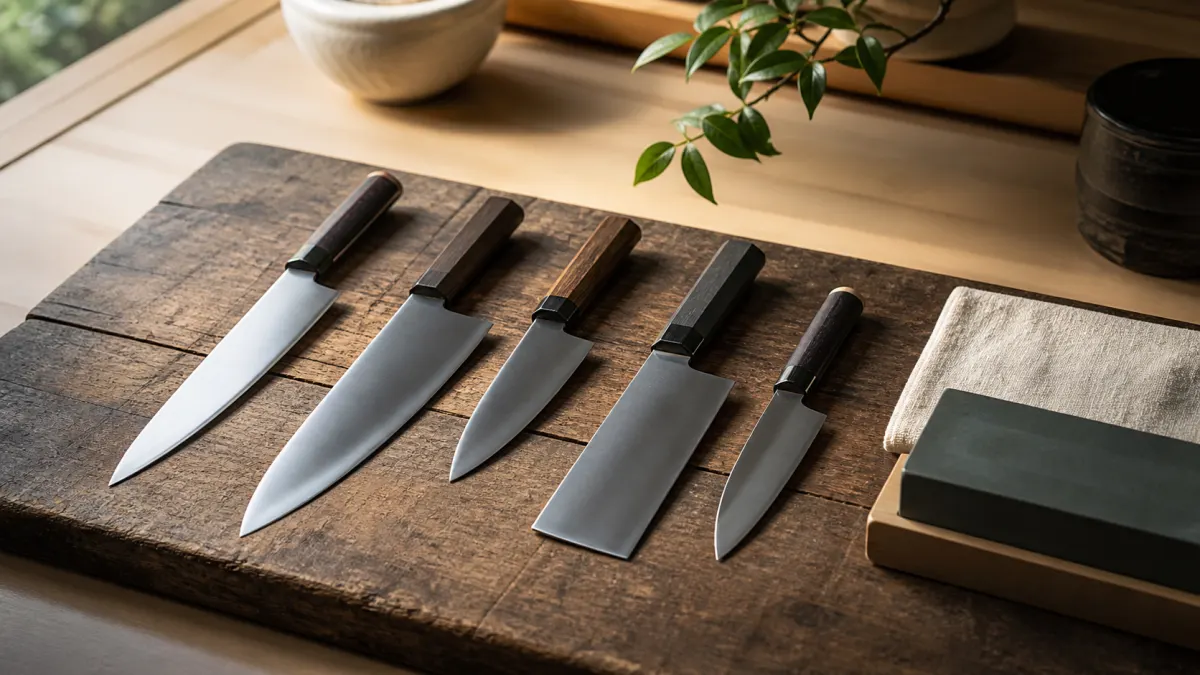
Japanese knives are an unusually good category for a small importer. The product is high value for its shipping weight, the customer researches before buying, and the origin story is genuine rather than manufactured. The difficulty is that the word Japanese is doing an enormous amount of work in most listings, and the gap between a mass-produced stainless blade and a hand-forged single-bevel from a three-craftsman workshop is larger than any photograph will show you.
Four regions, four different businesses
| Region | Character | Best for | Commercial note |
|---|---|---|---|
| Seki, Gifu | Industrialised, vertically integrated, export-experienced | Stainless production runs, OEM, consistent volume | Commonly cited as the source of the large majority of Japan's blade output, and the region most likely to have handled export before |
| Sakai, Osaka | Hand-forged, traditionally single-bevel, professional chef market | Premium and specialist SKUs | Work is split between a forger, a sharpener and a handle maker, so lead times are long and are not compressible |
| Tsubame-Sanjo, Niigata | Traditional technique combined with automated precision | Knives alongside tableware and tools | Useful when you want a broader kitchenware range from one region |
| Echizen, Fukui | Laminated construction, thin grinds, small workshops | Enthusiast and specialist SKUs | Small capacity; treat availability as the constraint |
Choosing the region is really choosing a business model. Seki is a manufacturing relationship. Sakai is closer to commissioning craft, with the scheduling consequences that implies.
Forged versus stamped, and why the price gap is real
A stamped blade is cut from sheet steel and ground. A forged blade is shaped under force, which lets the maker vary thickness along the blade and through the spine. The difference shows up in balance, in how the blade behaves through dense food, and in how much material there is to sharpen away over a decade of use.
Commercially, the mistake runs in both directions. Importers sell stamped blades with forged-blade language and lose the customers who know the difference. Others buy hand-forged inventory for a market that wanted a dishwasher-safe knife under a modest price point and sit on it. Decide which customer you are serving before you choose the maker, not after.
Steel: what your customer is actually buying
| Steel family | Character | Maintenance | Fits |
|---|---|---|---|
| Molybdenum stainless | Forgiving, affordable, widely produced | Low | Home cooks, gifts, volume SKUs |
| VG-10 | Harder stainless, good edge retention, very common in exports | Low to moderate | The mainstream premium position |
| Damascus-clad | A core steel with patterned cladding | Follows the core steel | Visual appeal; the pattern is cosmetic, not performance |
| Shirogami / Aogami carbon | Takes and holds a very fine edge | High — it will rust if left wet | Enthusiasts and professionals |
| Aogami Super | Among the hardest traditional options, roughly 65–67 HRC | High, and chips if misused | Specialist SKUs with an informed buyer |
The commercial trap in this category is carbon steel sold to a general audience. It performs beautifully and it rusts if it is left wet, and a home cook who was not told that will return it and describe it as defective. If your channel is mainstream retail, the maintenance requirement belongs in the listing, not in the small print.
Single bevel, double bevel, and handedness
Traditional Japanese knives are frequently ground on one side only. That geometry is what a sushi chef wants and it is not what a Western home kitchen expects. It also has a consequence most importers meet after their first order: a single-bevel knife is handed. The standard product is ground for right-handed use, and left-handed versions are a separate item with a longer lead time and a higher price, because they are made to order rather than pulled from stock.
Double-bevel shapes — gyuto, santoku, petty, nakiri — are the practical core of a range aimed at a general market, with single-bevel yanagiba and deba as specialist additions rather than the foundation.
MOQ and lead time
- Branded or OEM production runs commonly start in the range of a hundred to several hundred units per SKU, though the spread across suppliers is very wide and some will work in far smaller quantities at a higher unit price.
- Stock items from an export-experienced Seki supplier can move quickly. Hand-forged Sakai work moves at the speed of three separate craftsmen and is quoted in months.
- Handle materials and packaging frequently set the lead time rather than the blade.
- Seasonal demand is real. Quoting in the autumn for December delivery is late in this category.
OEM, engraving and private label
Knives take branding well, and the cost curve is steep in places that are not obvious. Laser engraving a logo onto a stainless blade is inexpensive and fast. A custom blade profile, a custom handle shape, or a bolster change means new tooling and a different conversation entirely. Packaging sits in between and is where a range starts to look like a brand rather than a resale.
Settle the ownership questions in writing before tooling: who owns the profile, whether the maker may sell the same shape to others, and what happens if a steel or a handle material is discontinued mid-range.
Export and destination-market rules
- Knives are a restricted category in a number of markets. Age-verified sale requirements, restrictions on particular blade shapes, and courier policies that refuse blades outright are all common, and they vary by country and sometimes by carrier rather than by law.
- Confirm your own market's rules before you commit to inventory, not after it arrives. This is one of the few categories where a shipment can be legal to export and problematic to sell.
- Describe the goods accurately on customs paperwork. Kitchen cutlery is a straightforward classification; vague descriptions on a blade shipment invite inspection.
- Ask where the blade was forged, ground and finished, and get the answer in writing. Japanese steel is not the same claim as made in Japan, and the distinction is exactly what your customer is paying the premium for.
Want introductions to makers rather than to resellers?
GuideTech contacts Japanese blade makers and wholesalers in Japanese, establishes what they can actually produce and at what minimum, verifies the company against public records, and coordinates samples and the first order from Tokyo.
Frequently asked questions
Can I buy Japanese knives wholesale without a Japanese company?
Yes, more easily than in most categories, because Seki in particular has long-standing export experience. Smaller traditional workshops are a different matter and usually need an exporter or a Japan-side agent in between.
What minimum order should I expect?
Branded runs commonly start in the hundreds per SKU, but the range across suppliers is very wide and some will sell far smaller quantities at a higher unit price. Treat any single published figure as a starting point.
Is VG-10 a Japanese steel?
It is a Japanese-developed stainless steel and it is very widely used in knives made for export. Its presence tells you about the blade material, not about where the knife was forged and finished.
Should I start with carbon or stainless?
Stainless, unless your channel is specifically enthusiasts or professionals. Carbon steel performs better in skilled hands and generates returns and complaints in general retail.